
Corporate retreat trends for 2026 show that companies are continuing to invest in in-person offsites — but with far more intention behind how that time is designed.
For organizations with distributed or hybrid teams, corporate retreats remain a critical moment for alignment, connection, and shared experience.
Despite what some trend pieces suggest, retreats aren’t becoming either fully unstructured getaways or nonstop strategy bootcamps. What’s actually changing is how intentionally the time together is being designed.
Companies are still investing in retreats that balance strategy, culture, and shared experience — but they’re doing it with more clarity, better pacing, and stronger purpose.
Here’s what’s actually working for corporate retreats in 2026.
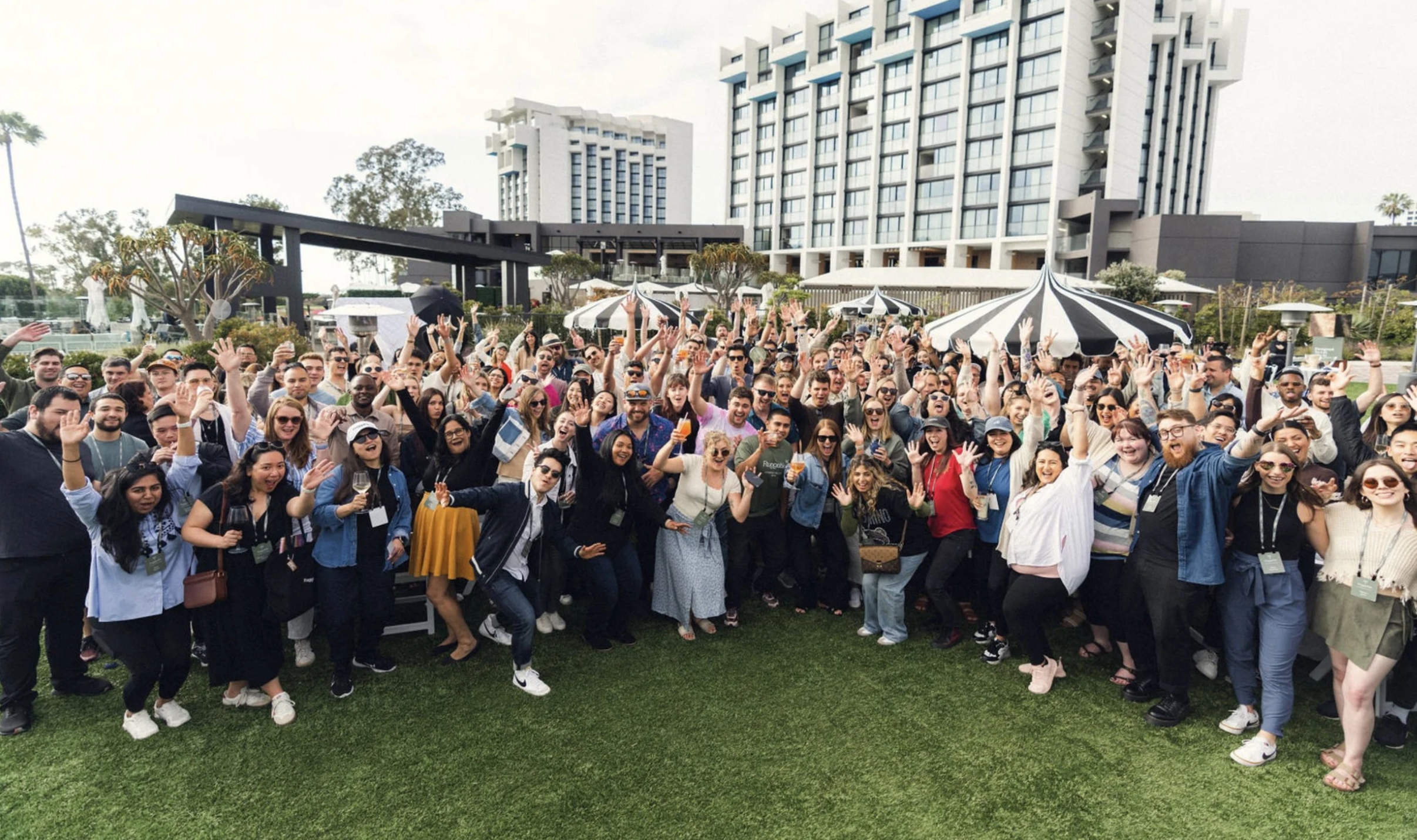
Whole-Team Corporate Retreats Are Still Common
For many companies, the annual retreat is the only time the entire team is together in person.
That makes the retreat about more than planning sessions. It’s an opportunity to:
- strengthen team relationships
- reinforce company culture
- build trust across departments
- create shared memories that support collaboration year-round
While leadership strategy sessions still happen, most corporate retreats in 2026 are intentionally designed for the full team — not just executives.
Trend insight: companies continue to see value in all-hands retreats because connection and alignment are difficult to replicate remotely.
Strategy Remains Central to Corporate Offsites
Contrary to popular belief, corporate retreats haven’t lost their strategic focus.
Most organizations still want their retreat to include:
- meaningful discussions and working sessions
- alignment on goals or priorities
- time to address challenges or change
- space for leadership visibility and communication
What has shifted is the delivery.
Instead of packing the agenda from morning to night, companies are designing fewer, more intentional sessions — allowing teams to stay focused without burning out.
2026 shift: strategic content is still essential, but it’s paced more thoughtfully across the retreat.
Downtime Is Built In — But Not Excessive
Downtime plays a role in most corporate retreats, but it’s no longer accidental or excessive.
In 2026, downtime is:
- planned intentionally
- used to support connection and reflection
- balanced against the goals of the retreat
This often looks like:
- realistic breaks between sessions
- protected evenings for social connection
- space for conversations to continue organically
The goal isn’t to fill every hour — or to leave days wide open — but to create a rhythm that supports both focus and connection.
Local Experiences Are Part of the Retreat Design
One of the most noticeable corporate retreat trends for 2026 is how companies are using the destination itself.
Rather than staying inside the venue for the entire program, retreats increasingly include:
- guided city or town explorations
- cultural or culinary experiences
- outdoor activities connected to the location
- offsite dinners or shared outings
These experiences aren’t just “fun extras.” They help teams bond and create shared context — which often carries back into daily work.
Key trend: the destination becomes an extension of the retreat experience, not just a backdrop.
No Two Corporate Retreats Have the Same Focus
There’s no longer a standard corporate retreat format.
Different organizations are using retreats to focus on different priorities, such as:
- reconnecting a remote team
- onboarding new hires
- navigating growth or organizational change
- reinforcing values and culture
- aligning on the year ahead
The most effective retreats are designed around one or two clear objectives, rather than trying to accomplish everything at once.
SEO takeaway: clarity drives better outcomes than complexity.
Experience Design Is About Flow, Not Flash
In 2026, successful corporate retreats prioritize flow over spectacle.
That means:
- smooth logistics
- realistic scheduling
- comfortable transitions between sessions and activities
- spaces that support both collaboration and relaxation
A well-designed retreat feels intentional and easy to move through — not overproduced or chaotic.
Lightweight Follow-Through Is the Norm
Most companies aren’t looking for extensive post-retreat action plans.
Instead, follow-through typically includes:
- a concise recap
- shared photos or highlights
- reinforcement of a few key takeaways
- a check-in to maintain momentum
The retreat sets the tone — without creating additional administrative burden.
The Real Corporate Retreat Trend for 2026: Intentional Balance
Corporate retreats in 2026 aren’t about extremes.
They’re about:
- purposeful strategy
- meaningful connection
- thoughtful pacing
- engaging local experiences
- and time that feels well spent
When these elements are balanced correctly, teams leave aligned, energized, and confident in the investment.
Planning a Corporate Retreat in 2026?
If you’re planning a corporate retreat or company offsite and want help designing the flow, experience, and logistics — so it feels strategic and enjoyable — I support teams through end-to-end retreat planning and execution.
Book a 15-minute retreat strategy call